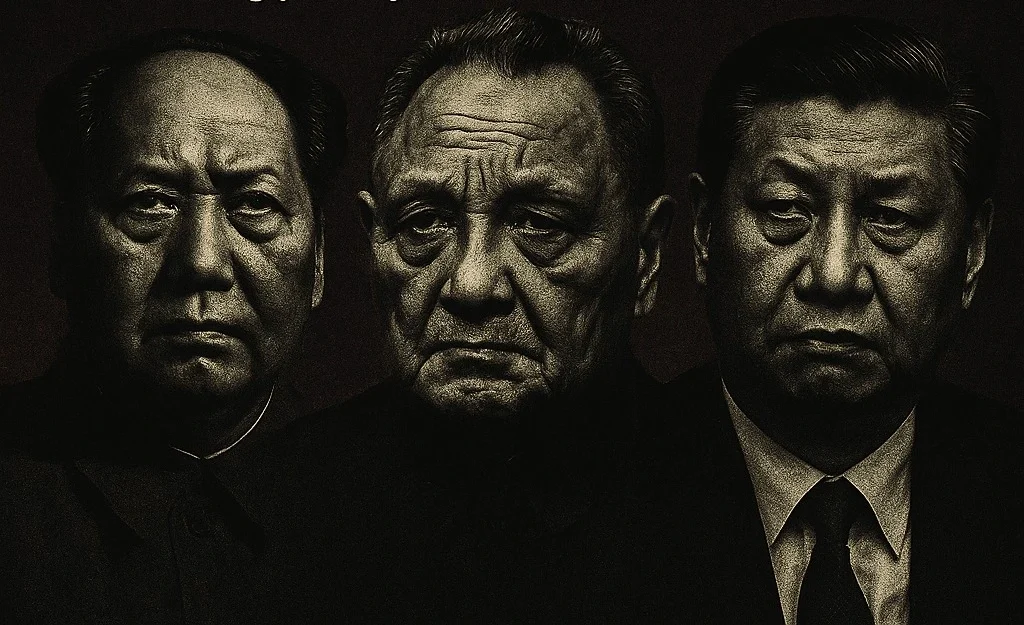
A Section from Mehmet Emin Hazret’s Book: “Kissinger and China: 50 Years of Love Betrayed”
The leadership legacy of the Chinese Communist Party (CCP) has been shaped by the persistent use of authoritarian governance and violence as an instrument of political control. Although leaders such as Mao Zedong, Deng Xiaoping, and Xi Jinping implemented different governance models across various historical periods, their policies share a common pattern: intensified repression, ideological enforcement, and the preservation of absolute authority. This systematic approach has profoundly defined the CCP’s historical and institutional character.
1. Mao Zedong: Revolutionary Violence and Social Devastation
a. Land Reforms and Mass Executions (1950–1953)
Abolishing Feudalism: Under Mao, the CCP targeted “landlords” in an effort to reshape the rural economy and achieve ideological transformation.
Hundreds of Thousands Executed: Those labeled as “enemies of the people” were publicly executed.
Rural Trauma: Deep social fractures emerged as traditional community bonds collapsed.
b. The Great Leap Forward: A Human-Made Catastrophe (1958–1961)
Disastrous Economic Policies: Mao’s push for heavy industry and collectivized agriculture caused a massive decline in food production.
40 Million Deaths: Starvation during this period became one of the worst human-made tragedies in modern history.
Ideological Obsession: Mao refused to acknowledge policy failures and used the crisis to reinforce party authority.
c. The Cultural Revolution: Creating and Destroying “Enemies” (1966–1976)
Pursuit of Ideological Purity: Mao launched large-scale purges against those accused of being counterrevolutionaries.
Red Guards: Youth groups were mobilized to eliminate “enemies of the party.”
Social Collapse: Millions were exiled, tortured, or killed, while China’s cultural heritage suffered enormous destruction.
State as an Instrument of Violence: Violence was systematically used not only to punish individuals but to solidify state power.
2. Deng Xiaoping: Economic Reform and the Tiananmen Massacre
a. Economic Reform with Strict Political Limits
Deng shifted away from Mao’s centrally planned economy toward market-oriented reforms. However, political freedoms remained severely restricted.
Political Control: Economic openness did not extend to democratic reforms.
b. Tiananmen Square Massacre (1989)
Suppression of Democratic Demands: Student calls for freedom and democracy were deemed a threat to CCP rule.
Massacre: The military was deployed against peaceful demonstrators. Thousands were killed or disappeared.
Message: Deng signaled that the boundaries of reform would be defined strictly by the CCP.
3. Xi Jinping: Uyghur Genocide and the Era of Technological Oppression
a. Centralized Leadership
Power Consolidation: Xi altered the constitution to secure lifelong leadership and tightened ideological control.
Cult of Leadership: Xi constructed a leader cult reminiscent of Mao, solidifying absolute authority.
b. Uyghur Genocide and the Surveillance State
Systematic Repression: Under Xi, China carried out mass detentions, forced labor, and other grave human rights abuses against the Uyghur population in East Turkistan—amounting to genocide.
Technological Surveillance: Facial recognition, AI-driven monitoring, and digital tracking became tools of mass control.
Cultural Erasure: Uygur identity, religion, and cultural practices were systematically targeted for elimination.
c. Hong Kong and the Destruction of Democratic Movements
National Security Law: Xi’s administration enacted new laws to suppress pro-democracy movements, effectively ending Hong Kong’s autonomy.
Mass Arrests: Hundreds of activists were detained, and freedom of expression was severely restricted.
Historical Continuity: The Persistence of Violence and Authoritarianism
Although each CCP era has exhibited different characteristics, the use of violence as an instrument of ideological enforcement and political control has remained constant:
Mao Zedong:
Mass violence to impose revolutionary ideology and “purify” society.
Deng Xiaoping:
Selective but decisive repression to protect the limits of economic reform.
Xi Jinping:
Totalitarian control through technology, mass surveillance, and cultural destruction.
This continuity demonstrates that the CCP views violence not merely as a tool of suppression but as a fundamental mechanism for preserving political authority and enforcing ideological conformity. From Mao to Xi, this historical trajectory reflects the party’s authoritarian nature and ideological persistence—while exacting devastating human and ethical consequences for both the Chinese population and the international community.
Mao exported communist ideology across the Third World, even as millions died from famine within China. He shipped books and portraits to sympathetic regimes while still sending food aid abroad. Xi Jinping, however, exports China’s authoritarian system through “debt-trap diplomacy,” imposing political influence over economically dependent countries.
To conclude with a Chinese proverb that fittingly captures the CCP’s nature:
“The snake may shed its skin, but its nature never changes.”





Be First to Comment