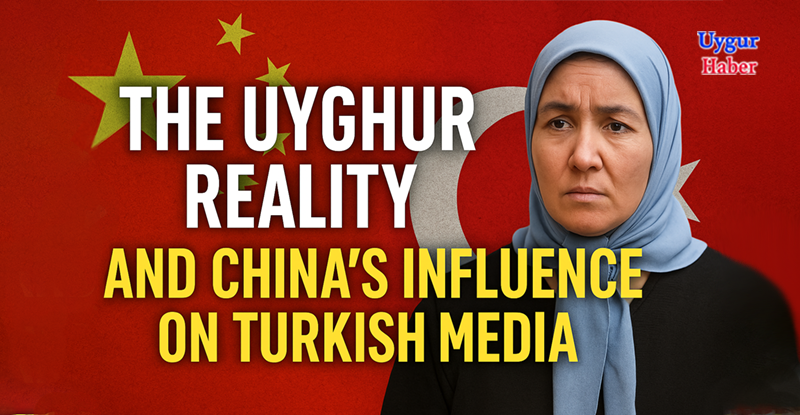
China employs economic influence and media collaborations to suppress the truth about the Uyghurs in the Turkish media and to promote its own propaganda.
Mehmet Emin Hazret
Uyghur Diaspora and the Silencing of Voices
Turkey hosts one of the largest Uyghur diasporas in the world.
Thousands of Uyghur refugees and families live in cities such as Istanbul, Kayseri, and Ankara.
However, despite this strong demographic presence, the issue of East Turkestan has failed to create a significant impact on Turkish public opinion, and the voice of the Uyghur people has not reached the broader society.
This has enabled China to carry out its genocide policies in East Turkestan with greater ease and impunity.
In the 21st century, while committing systematic genocide against Uyghur and other indigenous Muslim populations in East Turkestan, China has also launched comprehensive diplomatic efforts to silence the international community.
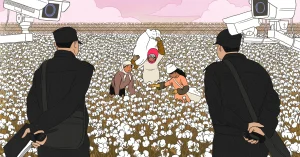
The mass arrests and physical and psychological tortures within concentration camps, which began in September 2016, continue silently to this day.
Simultaneously, starting in 2016, China initiated a major project to transform East Turkestan into its largest energy hub.
Today, East Turkestan has become one of the world’s largest energy centers, producing oil, natural gas, solar, and wind energy.
According to Chinese official sources, energy transferred from East Turkestan meets 34% of China’s total energy needs.
China attempts to mask the ongoing genocide in East Turkestan under the guise of “economic development,” and in doing so, has found willing collaborators within the global media landscape.
This report will specifically focus on China’s influence over Turkish media.
Manipulation of Uyghur-Related Content in Turkish Media
Since 2017, certain Turkish TV channels have continued to broadcast “Xinjiang” documentaries, while some newspapers have consistently promoted “Xinjiang Development Stories.” For example:
Cultural Performances:
Uyghur-themed dance and music shows are often performed by Han Chinese artists instead of real Uyghur performers, utilizing state-sponsored groups to portray a controlled cultural image.
Mosques and Religious Practices:
Footage of Uyghurs praying in mosques is often showcased. However, most of this footage dates back to before 2016, ignoring the severe religious oppression imposed in recent years.
Emphasis on Economic Development:
China’s economic projects in East Turkestan are heavily promoted, serving to overshadow ongoing human rights violations.
These realities demonstrate that Uyghur-themed content published in Turkish media overwhelmingly reflects China’s official propaganda while concealing the true situation.
Tangible Advantages China Provides to Turkish Media
Financial Support and Advertising Agreements:
In recent years, China has provided direct or indirect financial support to Turkish media outlets.
For instance, the Chinese Embassy and companies such as Huawei and BYD have published full-page advertisements in major Turkish newspapers. In 2021, a prominent conservative Turkish newspaper published a special advertorial commemorating the 100th anniversary of the Chinese Communist Party.
Additionally, advertorial articles praising China’s economic successes continue to appear in leading Turkish newspapers.
Content and Program Partnerships:
China’s official news agencies, such as Xinhua and CGTN, provide free content
to Turkish media.
Thus, Turkish channels can broadcast Chinese narratives at low or zero cost.
Journalist Invitations and Media Tours:
China invites Turkish journalists and media executives to attend controlled tours and soft diplomacy programs.
Notably, tours to selected areas in East Turkestan (Xinjiang) and participation in forums like the Shanghai Cooperation Organization Media Forum have been used to foster favorable reporting.
Free Content Services:
Chinese-origin articles, interviews, and success stories are offered to Turkish news outlets free of charge, often published without disclosing their original sources.
Long-Term Media Investments:
Platforms such as CRI Türk and CGTN Türk have been established to broadcast pro-China narratives directly to Turkish audiences.
Effects of China’s Advantages on Turkish Media
Change in News Language: Shift from “East Turkestan” to “Xinjiang”
In the past, the term “East Turkestan” was commonly used in Turkish media.
However, in recent years, the usage of “Xinjiang” has become increasingly dominant.
Through this change in terminology, the perception is subtly shaped to view the region not as an independent cultural Turkic homeland, but as an ordinary province of China.
In particular, three prominent media outlets—one right-wing, two left-wing—have almost completely adopted the use of “Xinjiang” in their reporting over the last two years.
Impact: Conceptual manipulation. Historical identity and uniqueness are diluted; China’s narrative is normalized.
Changes in News Structure: Praise Instead of Criticism
Severe human rights abuses such as forced labor, internment camps, and cultural erasure of Uyghurs receive very limited coverage in mainstream Turkish media. Instead, pro-China content highlights themes such as economic development, women’s education, and success in counter-terrorism.
The severe oppression in East Turkestan is completely ignored, while only themes like “progress,” “peace,” and “multicultural harmony” are presented.
Impact: Suppression of critical perspectives; dominance of a one-sided narrative.
Visual Manipulation: Use of Outdated Mosque and Dance Images
Footage showing Uyghurs praying in mosques predominantly dates back to before 2016.
(According to UN reports, over 8,000 mosques were demolished in East Turkestan after 2017.)
When showcasing Uyghur dances, real Uyghur performers are replaced with statesponsored Han Chinese or “approved” minority performers.
This creates a false perception for the audience that religious and cultural freedoms are thriving.
Impact: Visual softening and manipulation; deliberate creation of a perception gap between reality and presented imagery.
Increase in China-Sourced Content
There has been a notable rise in news articles sourced directly from Xinhua in Turkish media.
For example, articles with headlines like “Agricultural Productivity in Xinjiang Increases by 20%” frequently appear.
Similarly, content from CGTN Türk and CRI Türk is often disseminated indirectly through Turkish news agencies.
Impact: Unquestioned acceptance and integration of China’s success narratives into Turkish media discourse.
Justifying China Through Anti-Western Sentiment
A recurring theme in Turkish media suggests that:
“The West is jealous of China’s rise; the Uyghur issue is merely a Western ploy to hinder China’s development.”
This narrative is especially prevalent among leftist, nationalist, and anti-imperialist media outlets.
As a result, China’s human rights abuses are obscured under the narrative of a “Western conspiracy.”
Impact: Genuine human rights violations are sacrificed to political propaganda; public outrage is neutralized.
Case Analyses:
Case 1: A TV Channel – “Modern-Day China” Series (2024–2025)
Content:
Short daily documentaries showcased scenes from different regions of China, including East Turkestan, featuring women farming, children playing in parks, and folkloric dance performances.
Manipulation Analysis:
At First Glance: Portrayals of ethnic communities living peacefully and prosperously.
In Reality:
The individuals featured are mostly Han Chinese or carefully selected “model minorities.”
The real Uyghur population, their suffering, and religious life are completely hidden.
Conclusion: The repressive regime in East Turkestan is masked with “happy mosaic” imagery.
Case 2: “The Uyghur Card” Documentary (July 2024)
Content:
Portrays the Uyghur issue as a political tool used by the U.S. and the West against China.
Defends “re-education centers” as a measure against radicalization.
Manipulation Analysis:
At First Glance: Critique of Western double standards.
In Reality:
China’s official stance is replicated; abuses such as torture, forced labor, and family separations are ignored.
Conclusion: International human rights reports are disregarded, favoring China’s perspective.
Case 3: a leftist newspaper – “Cultural Festival in Xinjiang” (September 2024)
Content:
Describes a festival in East Turkestan where different ethnic groups celebrate together in peace.
Manipulation Analysis:
At First Glance: An atmosphere of cultural festivity.
In Reality:
State-organized events serve as window dressing while the genuine oppression of the Uyghur people is concealed.
Conclusion: Authentic struggles are reduced to folkloric performances.
Case 4: A Right-Wing Newspaper – Chinese Ambassador’s Article (January 2025)
Content:
A full-page article by the Chinese ambassador praising China’s “Xinjiang policies” was published.
Manipulation Analysis:
At First Glance: Presentation of China’s perspective.
In Reality:
Human rights violations are completely omitted; economic development and modernization narratives are amplified.
Conclusion: One-sided propaganda is legitimized under the guise of an “opinion piece.”
Why Both Government-Aligned and Opposition Media in Turkey Are United on China
Turkey’s Growing Economic Dependence on China
In recent years, Turkey has experienced serious economic challenges:
Foreign debt accumulation,
Currency crises,
Investment declines,
Political tensions with the United States and the European Union.
Amidst these issues, China has emerged as a major alternative to provide financial support:
Currency swap agreements,
Infrastructure and energy investments,
Logistics projects (such as the Belt and Road Initiative).
As a result, both the ruling government and opposition parties avoid criticizing China. Maintaining good relations with China is seen as a strategic and economic “lifeline” for Turkey.
Summary: Economic necessity hinders independent action. Fear of “damaging relations with China” prevails.
Rise of Anti-Americanism and the “Pro-China” Sentiment
Anti-American sentiment is strong among both government and opposition bases in Turkey, particularly after the failed coup attempt in 2016.
Within this atmosphere, China is increasingly perceived as the “power standing against the West.”
Some opposition factions—especially leftist and nationalist groups—view opposing “Western propaganda about Uyghurs” as an anti-imperialist stance.
Meanwhile, the government, already in conflict with the US and Europe, prefers to maintain a friendly posture towards China.
Summary: Criticizing China risks being labeled a “puppet of the West” in domestic politics.
Collapse of the Media Economy and the Importance of Chinese Resources
Since 2018, the Turkish media sector has faced an economic crisis:
Declining advertising revenues,
Shrinking newspaper circulations,
Financially struggling television channels.
China stepped in with sponsorships and advertising deals, offering vital financial lifelines to many media outlets.
Thus, both pro-government and opposition media increasingly accepted Chinasupported content and projects.
For financially vulnerable outlets especially, Chinese partnerships became essential.
Summary: Financial desperation sidelined media ethics, normalizing compliance with China’s boundaries.
Success of China’s “Soft Power” Strategy
Instead of hard propaganda, China now employs soft power strategies globally:
Cultural exchanges,
Tourism,
Education (such as Confucius Institutes).
In Turkey, China avoids direct pressure and instead uses indirect persuasion, partnerships, and symbolic gestures.
This approach creates voluntary self-censorship within media organizations.
Summary: Without applying overt censorship, China successfully fostered media loyalty through economic and diplomatic relationships.
Decline of the Uyghur Cause’s Strategic Importance in Turkey
Between 1990 and 2010, the Uyghur cause enjoyed strong public support in Turkey. However, over the last decade:
Visibility of the Uyghur issue has drastically declined in Turkish media,
Uyghur voices have been increasingly silenced,
Some political groups began labeling the Uyghur cause as a “Western conspiracy.”
Consequently, the perception took hold that “there’s nothing to lose by ignoring the Uyghurs.”
Summary: The Uyghur issue was strategically weakened, making pro-China media positions easier to justify.
The Bigger Picture
Normally clashing over every political issue, both pro-government and opposition media in Turkey have moved in “silent coordination” when it comes to China and the Uyghur issue.
Key reasons for this convergence include:
The vital need for Chinese economic support,
Fear of being stigmatized as “pro-Western” if China is criticized,
Financial appeal of Chinese-sponsored projects and advertising,
Effective use of soft power by China to foster compliant narratives, The systematic erosion of public sensitivity to the Uyghur cause.
Thus, even media outlets that appear to be fierce enemies in domestic politics have quietly cooperated in covering up the reality of the Uyghur genocide.
Silencing of the Uyghur Diaspora and Public Apathy in Turkey
Suppression of the East Turkestan Cause in Turkey
Limited Impact of Civil Society Organizations
Although several Uyghur associations and platforms exist in Turkey, these organizations:
Face severe financial difficulties, Have limited access to mainstream media, Are largely left without political support.
They have been unable to develop the institutional capacity needed for effective international lobbying.
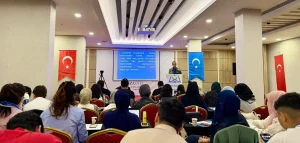
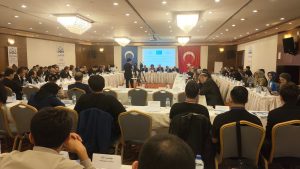
Public mobilization efforts are mostly confined to small groups and social media campaigns.
Result: The Uyghur diaspora has remained largely invisible within Turkey and has failed to create a significant public presence.
Limited Political Support
Only a few courageous members of parliament and political leaders (notably from the İYİ Party, Saadet Party, and Gelecek Party) have persistently raised the East Turkestan issue.
However, major parties—including both the ruling party and the main opposition—have either ignored the issue entirely or limited themselves to symbolic statements.
Major political campaigns and public initiatives have been deliberately suppressed to avoid jeopardizing economic and diplomatic relations with China.
Result: At both parliamentary and public levels, the voice of Uyghurs has been systematically muted.
Media’s Neglect
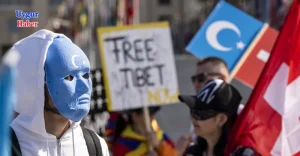
Protests led by Uyghur women in front of the Chinese Consulate in Istanbul, under the slogan “Where Is My Family?”, have continued for years across all seasons. Yet these protests have received almost no coverage in mainstream Turkish media.
This silence has been evident not only in pro-government outlets but also among opposition media.
At the same time, the same media organizations enthusiastically broadcast China’s portrayals of life in Xinjiang, such as dance performances, agricultural projects, and depictions of a “happy life.”
Result: Real human stories have been suppressed while artificial, state-approved narratives have been amplified.
Turkey’s Weakening International Position
Turkey’s silence on the Uyghur issue has also attracted international attention.
While countries like Canada, the United States, the United Kingdom, and Germany
have officially recognized the Uyghur genocide, Turkey has failed to take any meaningful political action.
Paradoxically, the country hosting the largest Uyghur diaspora has become one of the least active in applying diplomatic pressure on China.
Result: Turkey missed a historic opportunity to lead the cause of East Turkestan and has regressed to a passive stance in the global human rights movement.
Overall Assessment
Despite hosting a strong Uyghur community, Turkey failed to transform this into an effective platform for solidarity against China’s oppression.
This vacuum was further deepened by China’s media propaganda and economic pressure strategies.
Instead of confronting the harsh realities, Turkish public opinion has been placated with narratives such as “Xinjiang is developing.”
This silence allowed China to continue its cultural genocide in East Turkestan virtually unchallenged.
Conclusions and Recommendations: Combating Chinese Propaganda and
Safeguarding Information Integrity in Turkish Media
Key Findings
Since 2017, China has implemented systematic demographic engineering, cultural genocide, and assimilation policies in East Turkestan.
To soften its tarnished image, China launched an extensive global media propaganda campaign, heavily targeting Turkey as well.
Various Turkish media outlets—both pro-government and opposition—have, either directly or indirectly, benefited from:
- Chinese financial support, o Advertising and sponsorship agreements, o Ready-made content services, o Sponsored journalist trips to China, o Collaborative media projects.
As a result:
- The term “East Turkestan” has been replaced with “Xinjiang” in Turkish media,
- Coverage of Uyghur genocide and repression has dwindled, o Narratives emphasizing “development and prosperity” in Xinjiang have proliferated,
- Folkloric portrayals of Uyghur culture have been used to create a false image of normalization.
Outcome: A one-sided, pro-China narrative dominates Turkish media, significantly impairing public access to the truth.
Risks
Misinformation of the public,
Weakening of independent journalism,
Erosion of Turkey’s strategic reflexes, Decline of ethical standards in media.
Recommendations
Establish Media Transparency Laws:
All media outlets should disclose any foreign financial support or content partnerships clearly.
Strengthen Journalism Independence:
Professional training programs should be offered to help journalists identify and resist manipulative content.
Launch Public Awareness Campaigns:
NGOs, academics, and independent journalists should collaborate to inform society about the Uyghur plight and China’s media strategies.
Support the Uyghur Diaspora and Human Rights Organizations:
Testimonies and real-life stories of Uyghurs must be amplified through media channels.
Create Academic and Legal Monitoring Mechanisms:
Turkish universities and think tanks should publish independent reports on China’s influence in the media, and international legal actions against human rights abuses should be supported.
Final Manifesto:
“Truth cannot be censored.”
Media freedom in Turkey can only be preserved by exposing all forms of external pressure and manipulation.
Even if the Uyghur voice is silenced, the truth will eventually reach the conscience of humanity.



Be First to Comment