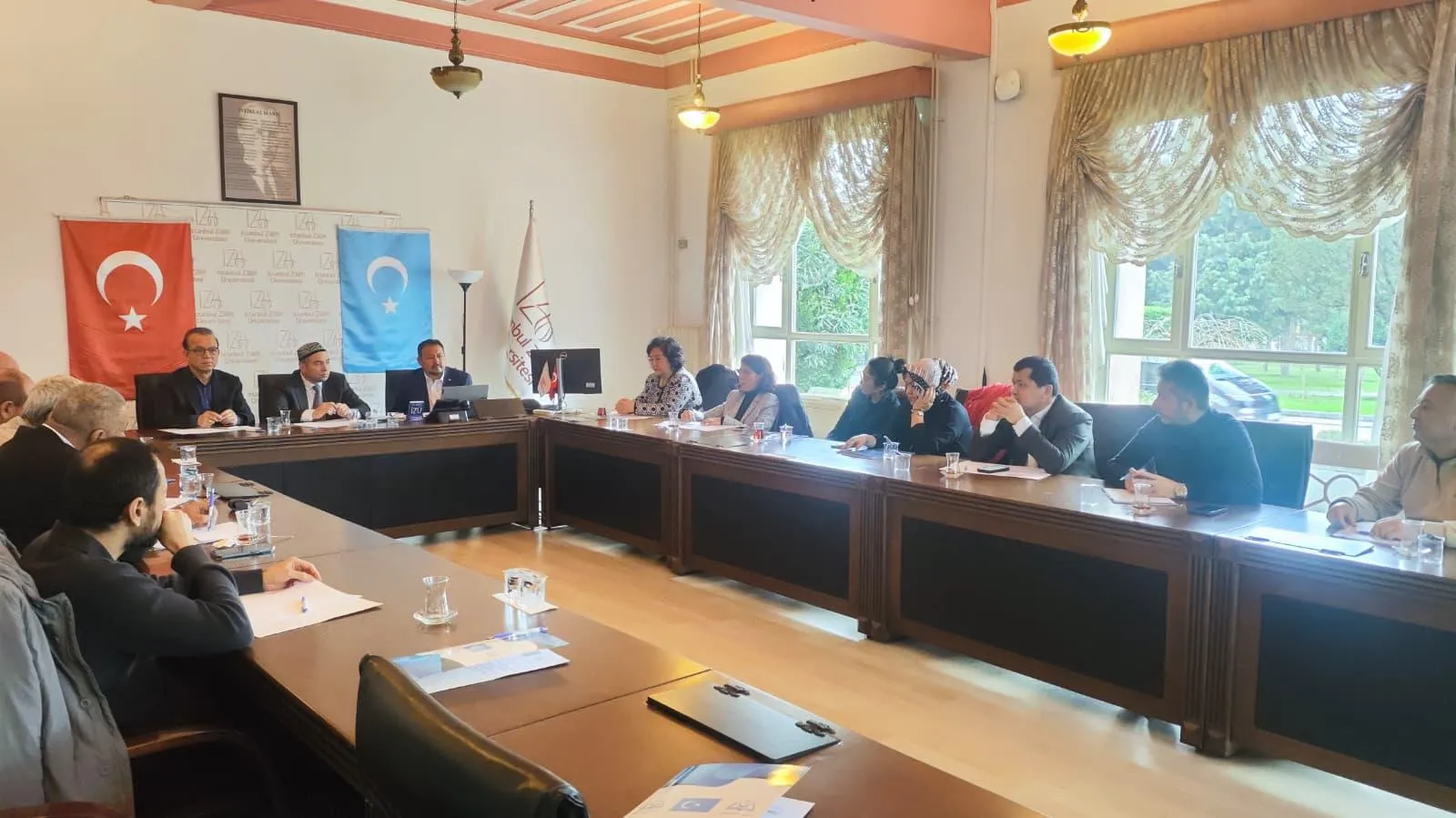
Uyghur NGO leaders and intellectuals met in Istanbul to discuss challenges faced by Uyghurs in Turkiye, strengthen organizational cooperation, address China’s cross-border repression, and raise concerns over emerging security risks.
A consultation meeting of East Turkistan organization leaders and intellectuals was held in Istanbul on January 24, 2026, at Istanbul Sabahattin Zaim University. The meeting was organized by the Platform of Uyghur Organizations in Turkiye and hosted by the Turkiye Uyghur Academy Foundation.
The discussions initially focused on the situation of Uyghurs living in Turkiye and the challenges they currently face. Participants emphasized that the G87 code – designating an individual as a “threat to national security” and applied to some non-Turkish citizen Uyghurs in Turkiye – has caused serious concern and distress within the Uyghur community. It was noted that this designation not only prevents affected individuals from obtaining Turkish citizenship and long-term residence permits, but also has severe and far-reaching negative consequences for their daily lives.
To address this issue, it was proposed that a group of intellectuals be formed to prepare a brief yet comprehensive report and to urgently engage in discussions with relevant Turkish state authorities.

Subsequently, the meeting turned to the issue of cooperation among East Turkistan organizations in Turkiye and the possibilities for strengthening joint efforts. It was noted that although cooperation currently exists in eight areas – such as jointly organizing meetings and demonstrations on special occasions – these forms of collaboration remain inadequate to effectively address the challenges and security risks faced by Uyghurs in Turkiye. Moreover, it was emphasized that the cooperation mechanism expected by Uyghurs in Turkiye and by the Turkish state from East Turkistan organizations has yet to be realized, partly due to indifference or obstruction by certain individuals and organizations.
In order to overcome these shortcomings, participants agreed to work toward the prompt establishment of a genuine, effective, and accountable cooperation mechanism among organizations through appropriate and practical means.

The meeting also examined China’s cross-border repression, intimidation, and conspiracy policies targeting Uyghurs in exile. It was discussed that, as a result of these policies, some Uyghurs have fallen into China’s trap by traveling to their homeland during an ongoing genocide and subsequently becoming instruments of China’s false propaganda. This situation was said to encourage others to consider visiting their homeland as well, thereby contributing to China’s broader strategy of isolating political activists and organizations engaged in the East Turkistan national independence struggle in exile. In response, participants deliberated various ways for East Turkistan organizations and intellectuals to collectively counter these efforts through a shared national awakening movement.
Finally, it was warned that Turkiye’s decision to abolish visa requirements for Chinese citizens could pose a serious threat to the safety of Uyghurs in Turkiye in the near future. It was stated that China could exploit this policy change to send a large number of spies and operatives into Turkiye. To mitigate these risks, participants stressed the necessity for organization leaders, intellectuals, and religious scholars to take appropriate security precautions and to engage with relevant Turkish state institutions, with the aim of ensuring that the safety of Uyghurs in Turkiye is protected and guaranteed by the Turkish state.





Be First to Comment