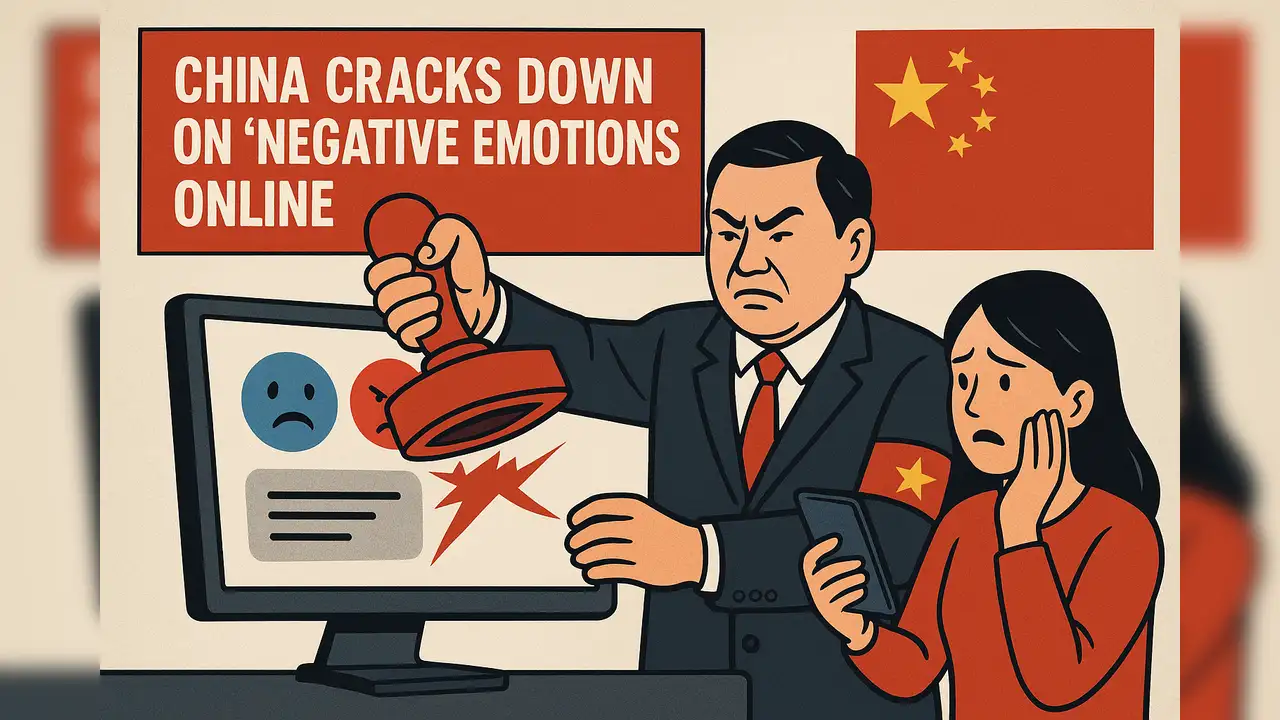
China launches online campaign to curb “negativity,” ordering platforms to remove pessimistic posts amid youth frustration and economic decline.
China’s Cyberspace Administration (CAC) has announced a two-month campaign aimed at cracking down on what it calls “excessive negativity” on social media, as authorities seek to shape public sentiment during a time of economic stagnation and rising social anxiety.
The campaign will target content that “exaggerates pessimistic emotions” or spreads “hopeless narratives,” including popular online phrases such as “studying is useless” and “hard work is useless.” These expressions have gained traction among young Chinese frustrated by limited job prospects, declining wages, and an increasingly uncertain future.
The CAC has ordered major platforms — including Weibo, Douyin, Xiaohongshu, and Kuaishou — to strengthen content moderation and remove posts deemed “negative,” “gloomy,” or “trivial.” Influencers, bloggers, and even educators have been warned against posting or discussing topics that could “amplify discontent.”
In recent weeks, prominent figures such as Hu Chenfeng and education vlogger Zhang Xuefeng have faced online censorship and content takedowns, after discussing issues like job scarcity and the collapse of the “996” work culture. Analysts say these measures reflect Beijing’s growing sensitivity to online sentiment, fearing that collective despair could translate into social instability.
While the authorities frame the campaign as an effort to “foster a positive and rational online atmosphere,” critics argue that it represents a broader attempt to suppress public frustration rather than address its root causes.
“Suppressing pessimism does not eliminate the reasons for it,” said a Chinese scholar who requested anonymity for safety reasons. “People are losing confidence not because of online rumors, but because of their real-life struggles.”
The new campaign adds to a long list of recent efforts by the Chinese government to tighten ideological control and promote “positive energy” (zheng nengliang), a term often used in official propaganda to describe content that aligns with state-approved optimism.



Be First to Comment