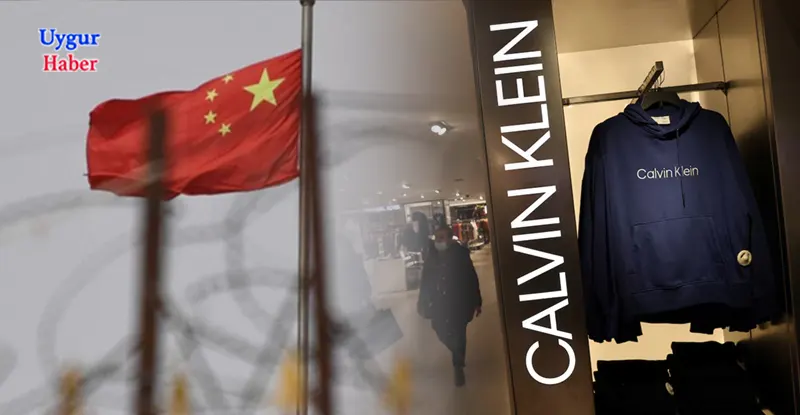
International companies boycotting raw materials and products produced in East Turkestan due to concerns about slave labor are facing pressure from China. Most recently, fashion giant PVH was subjected to an investigation.
China’s Ministry of Commerce announced on September 24, 2024, that PVH, which owns brands such as Calvin Klein, Van Heusen, and Tommy Hilfiger, will be investigated for stopping the purchase of cotton and clothing produced in the Uyghur Autonomous Region, as it is against Chinese law.
After the US banned the import of cotton products produced in East Turkestan in 2022 on the grounds of human rights violations and slave labor involving Uyghurs, the US-based fashion giant PVH stopped cotton purchases from the region.
COMPANY’S EXPORTS MAY BE HALTED
The company was instructed to submit the necessary documents within 30 days. If the company is found to have violated Chinese law, it could face sanctions such as fines and travel restrictions for its employees. PVH’s exports from China could even be stopped altogether.
The Untrustworthy Entity List, introduced by Beijing in 2020, is said to be applied for the first time against a company that stopped buying cotton from the Uyghur Autonomous Region.
INCREASED RISK FOR INTERNATIONAL COMPANIES
Sean Stein, director of the American Chamber of Commerce in China, says the move creates a huge risk for global companies. China’s actions have companies in other sectors worried about similar sanctions.
Previously, Nike and H&M announced that they would stop using goods made in East Turkestan, drawing backlash from their customers in China.
China accounts for 20% of the world’s cotton production, and more than 90% of this cotton is produced in East Turkestan. Many international companies with a high dependence on China are reassessing their risks with this new pressure.




Be First to Comment