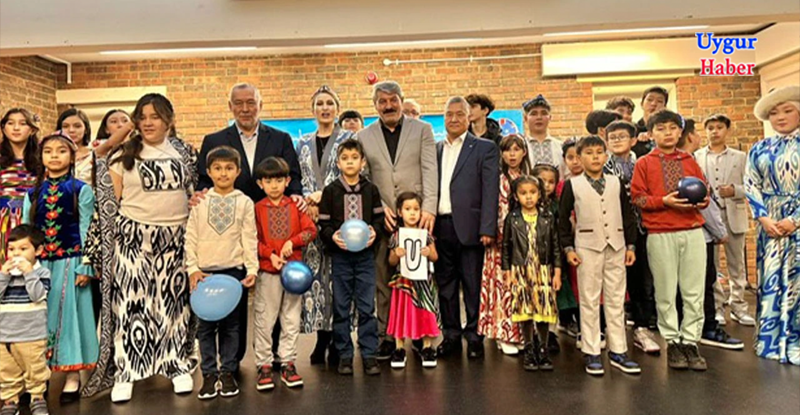
The Uyghur community living in the UK organized a ‘National Day’ event in London to mark the founding anniversaries of the East Turkistan Republics.
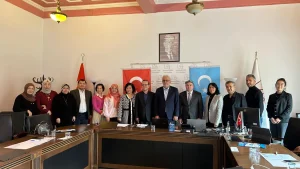
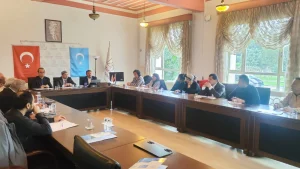
To mark the anniversaries of the founding of the two republics in East Turkistan on 12 November 1933 and 1944, the Uyghur Community Association of the UK held a ‘National Day’ event on 16 November 2024 at the Uyghur School in Enfield.
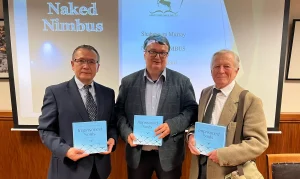
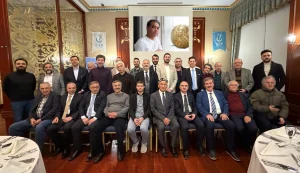
David Ball from Uyghur Solidarity Campaign, Rahima Mahmut from Stop Uyghur Genocide, Atilla Abacıoğlu, President of the UK Turkish World Platform, Necmi Hasanoğlu, Educational Activist, Abdusselam Savaş from the UK Kazakh Turks Association, and representatives of the UK Uyghur community attended the event.
In his speech, Maire Aisa, President of the UK Uyghur Community, said that there were two independent declarations in the history of East Turkistan, in 1933 and 1944, and that these declarations continue to be strong symbols for the Uyghur people in East Turkistan.
Mair Isa explained the establishment processes, backgrounds and reasons for the dissolution of the East Turkistan Republics and concluded his speech by saying, “However, until now, Uyghurs have not received enough support from the people and at the governmental level, and they are still living under oppression without freedom and human rights. The Uyghur genocide needs to be taken seriously by the local and international communities and immediate action needs to be taken to stop this genocide.”

EXAMPLES OF UYGHUR CULTURE WERE PRESENTED
In the commemoration event, which was presented by Dilnaz Kerim in English and Alim Abdulla in Uyghur, children recited poems and performed songs about Uyghur culture and traditional dances. Pictures and symbols reflecting East Turkistan and Uyghur culture were exhibited.
At the event where information about Uyghur history was shared, delicious dishes and desserts of Uyghur cuisine prepared by the women were served.
The participants expressed their wish that such cultural events should be held regularly in addition to language education for new generations to learn their history and preserve their culture.


Be First to Comment